You Aren't Too Expensive - How to Attract Customers Who Will Pay What You're Worth
You've poured everything into your product or service. The quality is genuinely there, you know it, and your best customers know it. But new enquiries keep stalling. People compare you to cheaper competitors. Some ghost you the moment they see a price. You've even tried lowering your rates, and nothing changed.
Here's the truth: you probably aren't too expensive. You're just suffering from bad branding.
This post breaks down why premium products get undervalued, what bad branding actually looks like, and how fixing it creates an upward spiral of better clients, higher prices, and a more sustainable business.
Do any of these sound familiar?
Dropping your prices has had zero impact on sales
Customers jump to a cheaper competitor, even though your product is objectively better
Your margins are terrible — you're working hard and barely profiting
People don't seem to understand what makes what you do special
If you're nodding along, you don't have a pricing problem. You have a perceived value problem.
What is perceived value, and why does it matter?
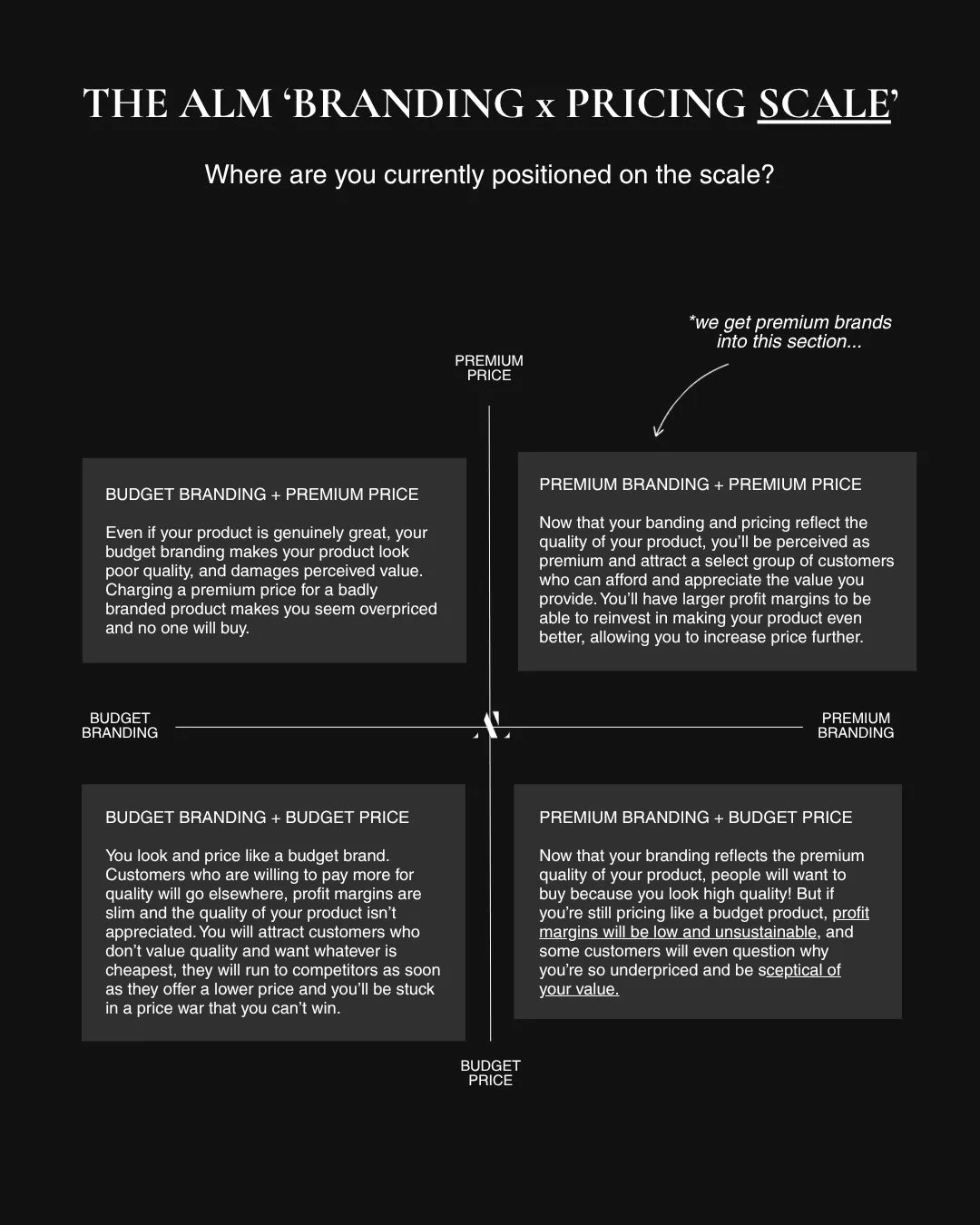
Perceived value is how much a customer believes something is worth before they buy it. And it's shaped almost entirely by how your brand looks and feels, not by the quality of what's inside.
People judge a book by its cover. They assume that how you do one thing is how you do everything. If your branding looks cheap, low-effort, or inconsistent, potential customers will unconsciously assume your product or service is too — and they'll never stick around long enough to find out otherwise.
This is the core of the branding-pricing relationship: strong branding increases perceived value, which increases what people are willing to pay.
What does bad branding actually look like? Bad branding doesn't always mean ugly. Sometimes it's subtle. Watch out for:
Low-quality visuals — blurry or pixelated images, overused stock photography, or obviously AI-generated imagery undermine trust instantly
Inconsistency — mismatched fonts, clashing colours, or a logo that looks different across platforms signals a lack of attention to detail
Dated design — even if it was great five years ago, an outdated look suggests you've stopped evolving
Poor packaging or presentation — if the unboxing or first impression doesn't match the quality inside, you've already lost people
No clear positioning — if customers can't quickly understand who you're for and why you're worth it, they'll move on
Any one of these is enough to kill a sale before it starts.
The Pricing Cycle
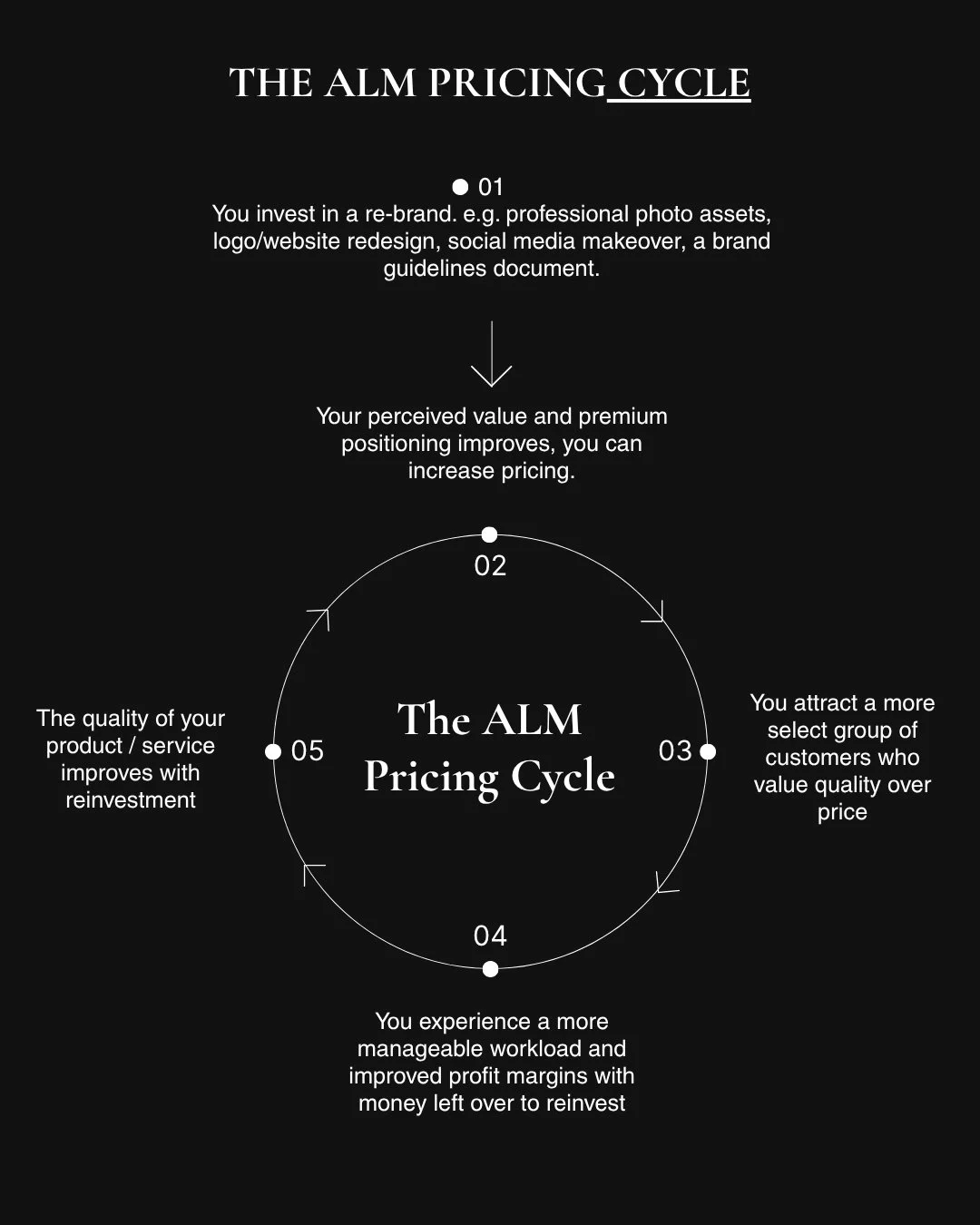
The pricing cycle — what happens when you fix it
When your branding genuinely reflects the quality of what you offer, something shifts. The right customers start finding you. They're not shopping on price, they want the best, and they expect to pay for it.
This creates a positive cycle: better branding → higher perceived value → premium clients → stronger margins → more time and resource to reinvest in your offer → even higher value → even better branding.
You do less work, for more money, for people who actually appreciate what you do.
You'll know it's working when:
Your pricing finally feels sustainable
Demand is strong enough that you can increase your rates
Customers don't leave when a competitor undercuts you, they want you, not just the cheapest option
Enquiries come in pre-sold on your value, not looking to negotiate
Ready to align how your business looks with what it's actually worth?
A strategic rebrand doesn't just make things look better, it repositions you entirely. If you think your branding might be holding your pricing back, book a free consultation call here.